
How Many Laser Sessions to Be Summer-Ready?
To be summer-ready by December, most people need around 6–8 laser hair removal sessions spaced 4–6 weeks apart, so the safest time to start is winter — June to August. Because each session is roughly a month apart, every month before summer equals about one session. A winter start fits four to five sessions in before December — enough for a clearly visible reduction — and leaves room to finish the course over summer and autumn. Here's how the timeline works and how to plan yours.
How many sessions does laser hair removal take?
Most clients need around six to eight sessions for a significant, lasting reduction. Some notice a real difference after three or four; others — particularly where hormones drive hair growth — may need ten or more plus occasional maintenance.
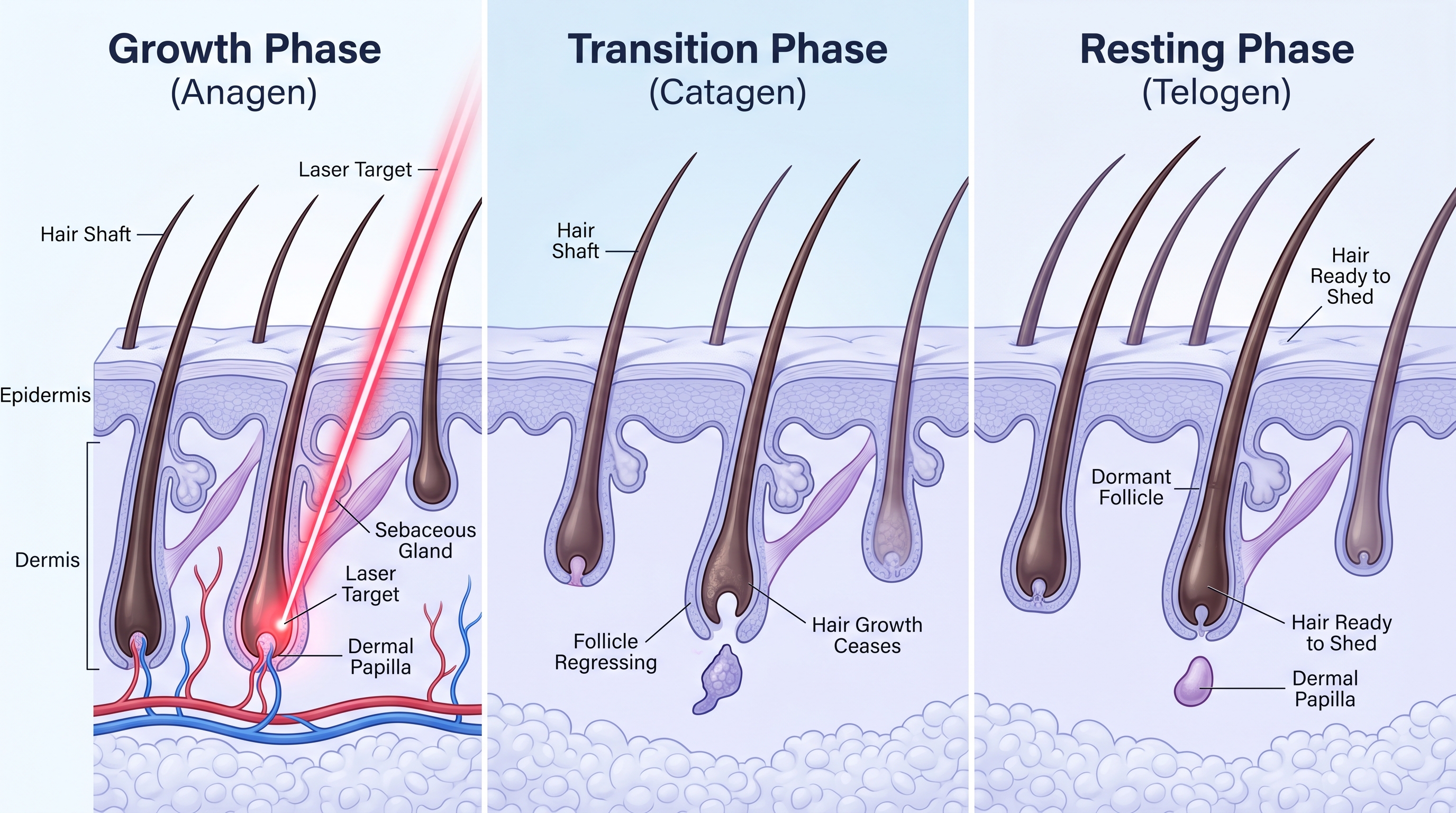
The reason is the hair growth cycle. Every follicle moves through a growth, transition and resting phase, and laser energy only affects follicles that are actively growing. Since only a portion of the hair in any area is in that phase at once, one session can only ever treat that portion — which is why a single appointment never finishes the job. Spaced correctly, repeated sessions catch each new group of follicles as it enters the growth phase. It's also why laser is described as long-term hair reduction rather than guaranteed permanent removal.
What affects how many sessions you need
- Treatment area — underarms and the bikini line usually respond fastest; legs and arms sit in the middle; facial hair is often slower because it's more hormone-driven.
- Hair colour and thickness — dark, coarse hair absorbs laser energy best. Very light blonde, grey and red hair has little pigment and responds poorly.
- Skin type — modern systems treat a wide range of skin tones safely, but settings are tailored to your skin, which can affect how fast results build.
- Hormonal factors — conditions such as PCOS can mean more sessions and ongoing maintenance.
- Medications and medical history — some medications change how skin responds, so always disclose them beforehand.
An in-person consultation is the only reliable way to estimate your session count.
How far apart should sessions be?
Most body areas are spaced four to six weeks apart. Facial areas cycle faster and are often treated every four weeks, while legs are sometimes spaced further apart later in a course. Sticking to the interval matters: coming in too soon treats skin before enough follicles are in the growth phase (a wasted session), while leaving it too long lets follicles recover.
Planning backwards from a Melbourne summer
Melbourne summer effectively starts in December, so plan around that date. A winter start (June–August) gives the most room, since a full six-to-eight-session course can span six months or more — and it's the easiest time of year to follow the sun-exposure guidance that comes with laser.
Here's how an August start typically plays out for an area like legs or underarms:
Month What typically happens
August. Consultation, patch test and first session
September Second session; hairs from the first session shed
October Third session; regrowth is patchier and finer
November Fourth s. ssion; many notice clearly reduced regrowth
December Fifth session if spacing allows; visibly less hair for summer
Four to five sessions won't complete a full course, but it's usually enough for a noticeable reduction by December, with the remaining sessions continuing over summer and autumn.
Starting later? A spring start (October–November) usually allows two to three sessions before summer — expect slower, finer regrowth rather than a dramatic change, with your course finishing through autumn so you arrive at the following summer close to your final result. If you're aiming at a specific event like a December wedding or January holiday, mention the date at your consultation so we can plan around it.
Sun, tans and laser
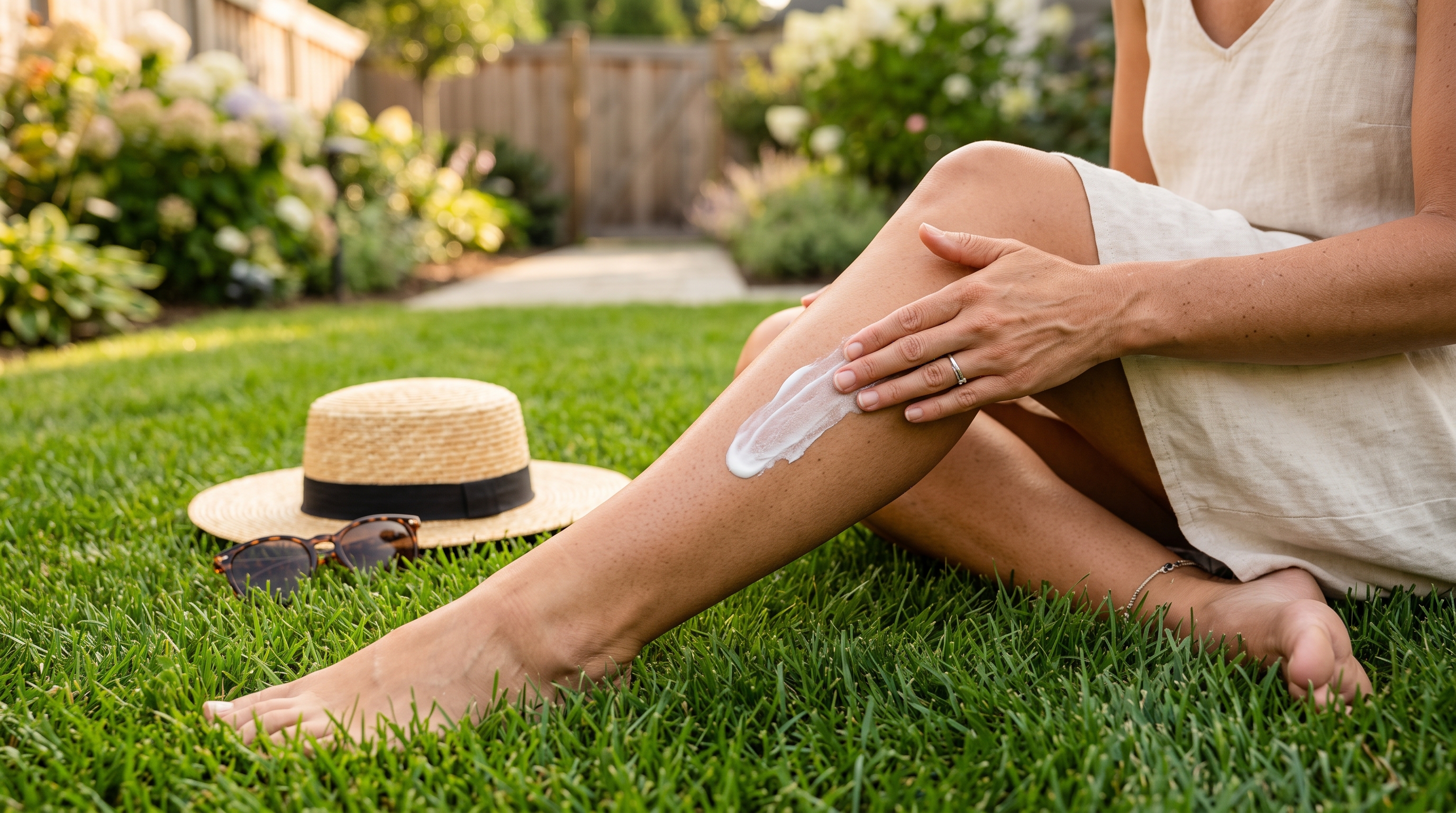
Laser and recent sun exposure don't mix. Tanned skin carries extra pigment, which makes treatment less comfortable and less precise, so avoid significant sun for about two weeks before and after each session and wear a broad-spectrum sunscreen daily on treated areas. Fake tan must be fully removed before any appointment.
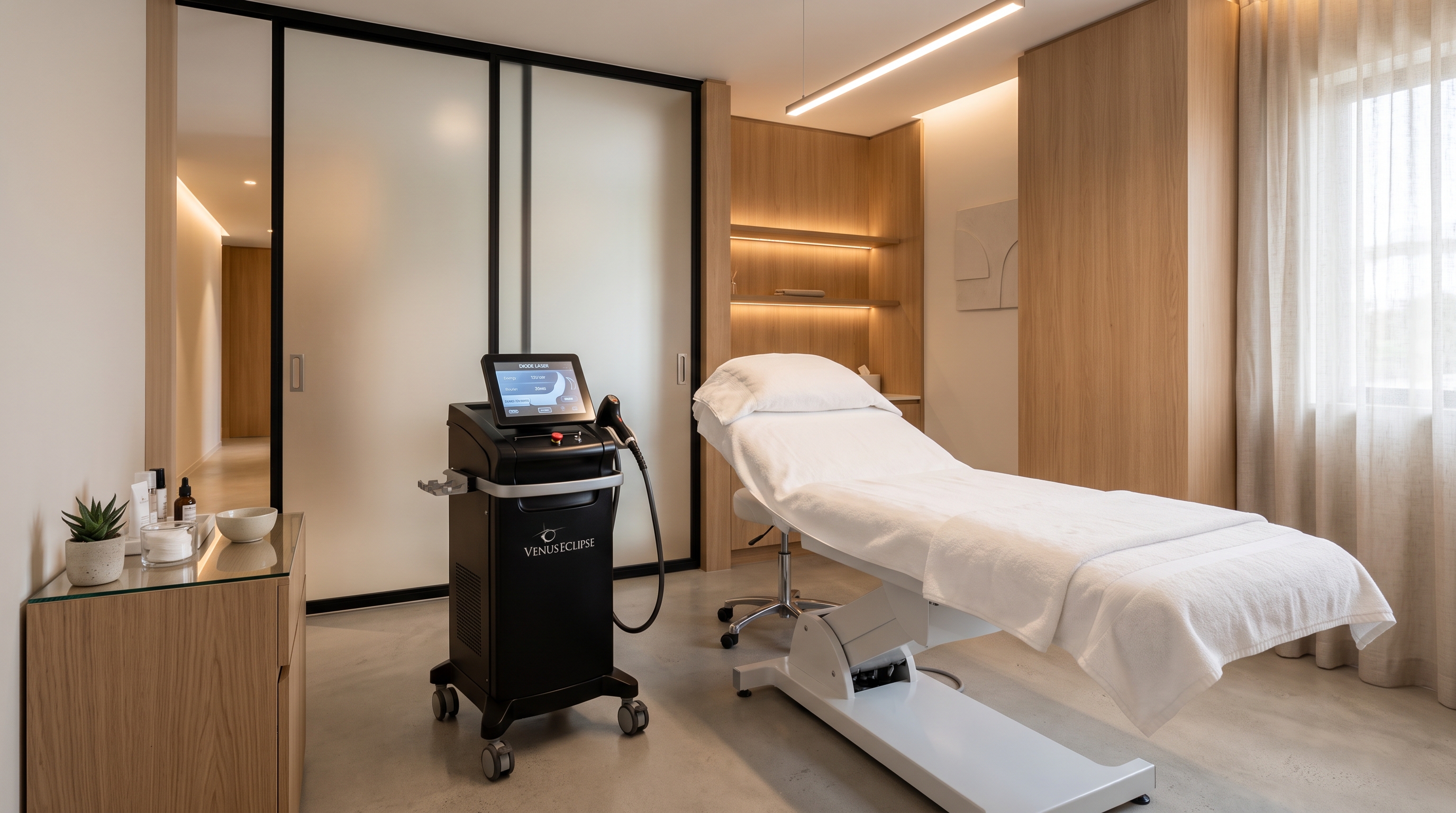
At our Hawksburn studio we use the Soprano Ice by Alma Lasers, a diode system designed to treat a wide range of skin tones with gradual heating and contact cooling — comfortable and flexible year-round. Even so, we assess your skin on the day and may adjust settings or postpone if you arrive with a fresh tan.
Preparing for your sessions
- Shave the area within about 24 hours of your appointment, unless advised otherwise.
- Don't wax, pluck or epilate between sessions — these remove the follicle the laser needs to target. Shaving is fine.
- Keep the area free of fake tan and heavy sun exposure.
- Disclose any medications, skin conditions or recent cosmetic treatments at your consultation.
Laser is usually priced per area per session, and packages bring the per-session price down. Larger areas like full legs cost more than small areas like underarms or upper lip; a consultation gives you an exact quote.
Get a plan that fits your timeline
Because session numbers vary so much, the most useful first step is a consultation: we assess your skin type, hair colour and treatment areas, then map a realistic schedule against your summer deadline. Laser hair removal is available at our Hawksburn studio — book a consultation there or at Malvern Central. If you're aiming for December, booking in winter keeps the full timeline open.
FAQ
- How many sessions before I see a difference?
- Treated hairs shed in the weeks after the first session, so many clients notice a change early. A clear, consistent reduction usually shows after three to four sessions.
- Does laser hair removal hurt?
- Most clients describe the Soprano Ice as a warm sensation rather than the sharp flick of older lasers, thanks to gradual heating and built-in cooling. Sensitive areas like the bikini line and upper lip are more noticeable but still tolerable.
- Can I have laser in summer or with a tan?
- Treatment can continue over summer with sensible sun care — daily sunscreen and no deliberate tanning. A fresh tan may mean adjusted settings or a postponed session, assessed on the day.
- When should I book to be ready for summer in Melbourne?
- For a visible reduction by December, a winter start between June and August works best. August is generally the last comfortable starting point for a meaningful difference by summer.
- Is laser hair removal permanent?
- Laser delivers significant long-term reduction rather than guaranteed permanent removal. Most clients maintain results with occasional sessions, often once or twice a year.